Which kart helmet should you choose? For leisure, a full-face helmet homologated to ECE 22 is enough, and most tracks lend you one. For competition, you need a CIK-FIA-recognised homologation (Snell-FIA standards), and for drivers under 15 a specific lightweight helmet. The rest is a matter of budget and comfort.
The helmet is the one item you should never skimp on. Not because you must spend the maximum, but because a poor choice means compromised safety. Good news: you do not need an expensive helmet to be well protected, as long as you know what to look for.
The homologation standards to know
ECE 22: the leisure standard
The ECE 22 standard (22.06 on recent models, 22.05 on older ones) is the motorcycle standard homologated in Europe. It is accepted at the vast majority of leisure tracks. Less demanding than karting-specific standards on some points, it still offers serious protection for occasional use. If you only drive for leisure on tracks open to the public, a full-face ECE 22 helmet is enough.
CIK-FIA and Snell-FIA: competition
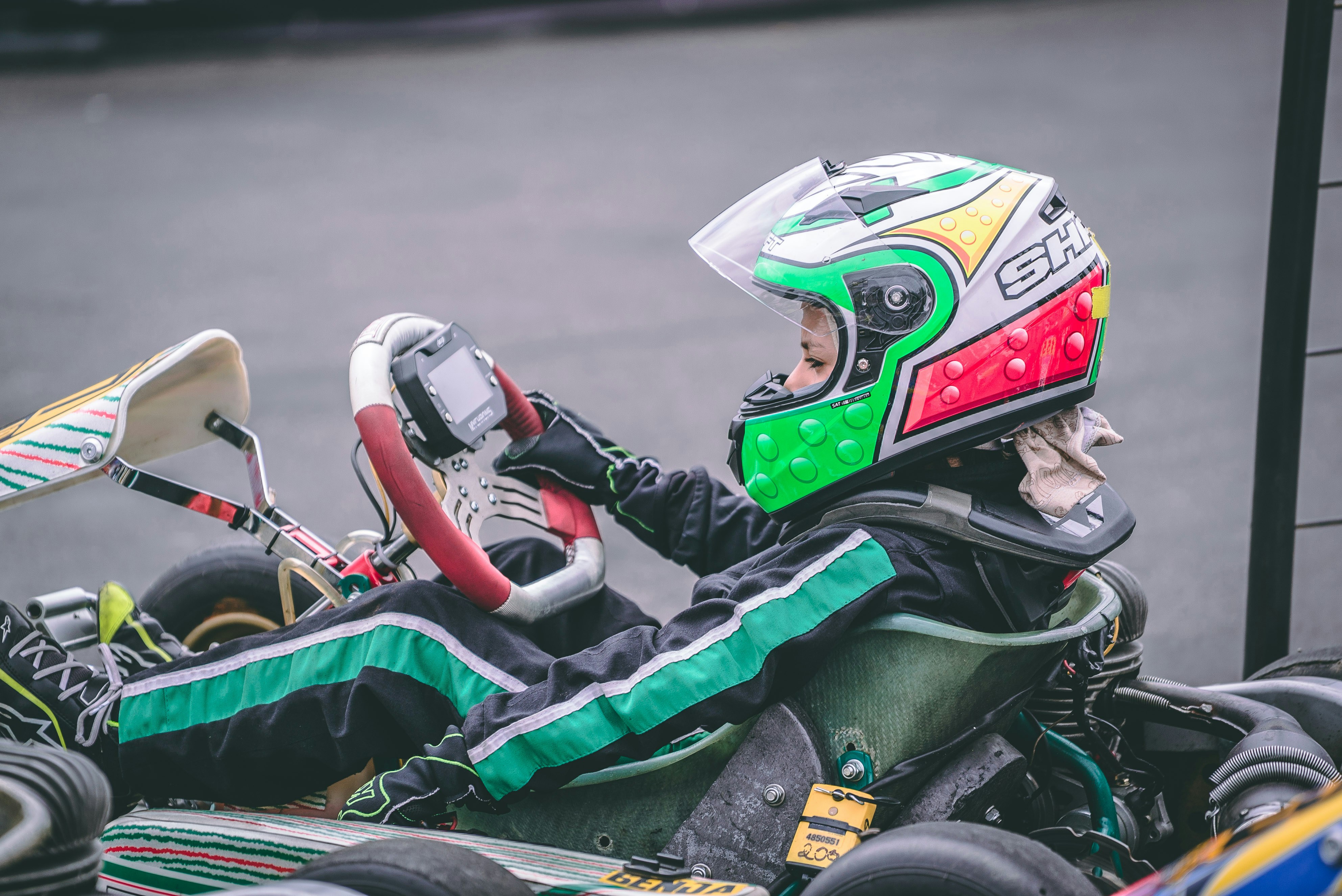
As soon as you take part in official events, you need a helmet homologated by the CIK-FIA, which relies on the Snell-FIA standards. These helmets are designed for the demands of karting: full-face only, fuel-resistant, built for the discipline's specific impacts. It is also the best level of protection if you drive intensively.
The case of under-15s
For young drivers, the FFSA rules are precise: a helmet homologated Snell-FIA CMR2016 or CMS2016 (or the older 2007 versions), or a child-sized ECE 22 05/06 helmet under 1250 grams. Weight matters: a helmet that is too heavy dangerously strains a child's neck. Never let a child drive with an adult helmet 'to make do'.
| Use | Expected homologation |
|---|---|
| Leisure (public track) | Full-face helmet homologated to ECE 22 |
| Competition, 15 and over | Homologated CIK-FIA / Snell-FIA (or recognised national standards) |
| Competition, under 15 | Snell-FIA CMR/CMS, or child ECE 22 under 1250 g |
In leisure, mainly check that the lent helmet is clean and in your size. In competition, your licence dictates the exact homologation: always refer to the current year's FFSA technical appendix, updated each season.
Full-face or open-face?
For karting, the answer is simple: full-face, always. Open-face helmets (exposed face, scooter type) do not protect the face in an impact, and the vast majority of tracks refuse them. Among full-face helmets, you will find 'cross' models (no visor, with separate goggles, uncommon in leisure) and road/karting models with an integrated visor, the most common and the most practical.
What budget to plan for?
If you want your own helmet, here are the main ranges, from the simplest to the most advanced:
- Entry level: basic ECE homologation, enough protection to start, but limited comfort and lightness. For very occasional use.
- Mid-range: the right compromise for a regular driver. Good ECE or entry-level CIK-FIA homologation, decent comfort, reasonable weight. This is where most amateurs sit.
- High end: composite materials, reduced weight, refined ventilation. For those who drive often or in competition.
- Premium / competition: carbon fibre, ultra-light construction, worked aerodynamics. The territory of serious competition.
The benchmark brands
A few makers have proven themselves. Arai and Bell are the historic references in motor sport, present from F1 to karting: flawless quality, high prices. OMP, Sparco and Alpinestars offer good, more accessible CIK-FIA helmets. LS2 and HJC often come up in the accessible range for leisure. Stilo is appreciated in competition for its light, well-ventilated models.
Care and lifespan
A helmet does not last forever. After an impact, even with no visible damage, its internal structure may be compromised: replace it. Most makers recommend replacing it roughly every 5 years, due to material ageing. Clean the inner padding regularly (often removable and washable): saturated with sweat, it loses comfort and effectiveness. And store the helmet in its bag, away from heat and UV, which degrade materials faster than you would think.
The right helmet is the most rational investment in karting. Complete it with the rest of the gear (our suit and gloves guides), then go and try it in real conditions: find a track near you on Kart-Map.